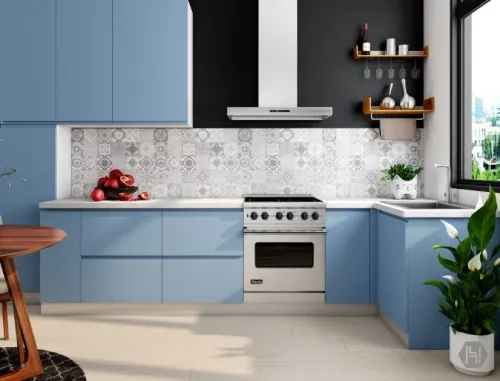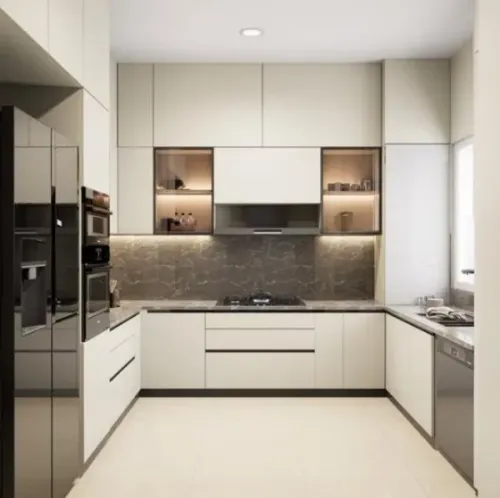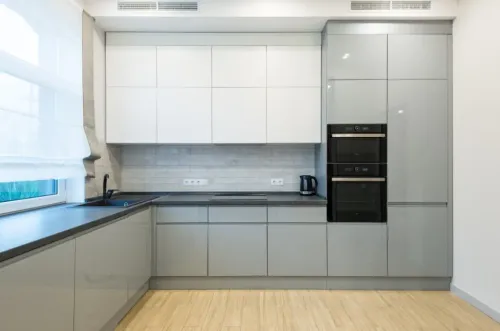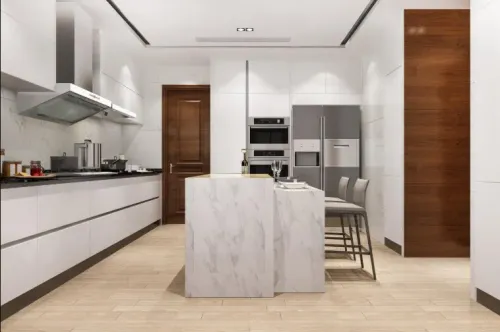
Acrylic can handle the daily demands of a Thane family kitchen, but the finish alone does not determine whether the installation will survive humidity, spills, children and repeated use. By the end, you will be able to judge the finish, compare it with alternatives, verify the construction behind it and decide where acrylic belongs in your kitchen.
Key takeaways
- Choose acrylic when you want a bright, wipe-clean cabinet finish.
- Use edge-banding, moisture-resistant boards and quality hardware for longer life.
- Select matte acrylic to reduce visible fingerprints and reflections.
- Avoid acrylic near intense heat unless you add proper protective details.
When acrylic works in a busy Thane family kitchen
Acrylic modular kitchen design is suitable for family homes in Thane when you want a bright, wipe-clean finish and will maintain it consistently. Frequent cooking, oil splashes, steam and repeated cabinet opening do not automatically rule it out.
An intact acrylic face is non-porous, so spills usually wipe away with a soft cloth and mild detergent.
Acrylic is not waterproof. During monsoon humidity, water usually causes trouble at exposed edges, sink cut-outs, joints, plumbing leaks and the underside of cabinets—not across the sealed front surface. Ask for moisture-resistant or boiling-water-resistant plywood, sealed panel edges and a properly protected sink cabinet; ordinary unsealed MDF is a poor choice for wet zones.
Keep hot cookware away from acrylic panels and specify a suitable countertop, heat-resistant backsplash, protective fillers and safe clearance around the hob.
For households with children, pets or heavy daily use, an acrylic kitchen for family homes demands more care than textured laminate. Fingerprints, grease and minor scratches show quickly on high-gloss shutters, while rough sponges, abrasive powder and solvent cleaners can dull the finish.
Choose acrylic when its appearance justifies regular wiping, and use a tougher, more forgiving material in high-contact areas such as below the sink or near handles.
Acrylic’s daily advantages and the finish-related trade-offs
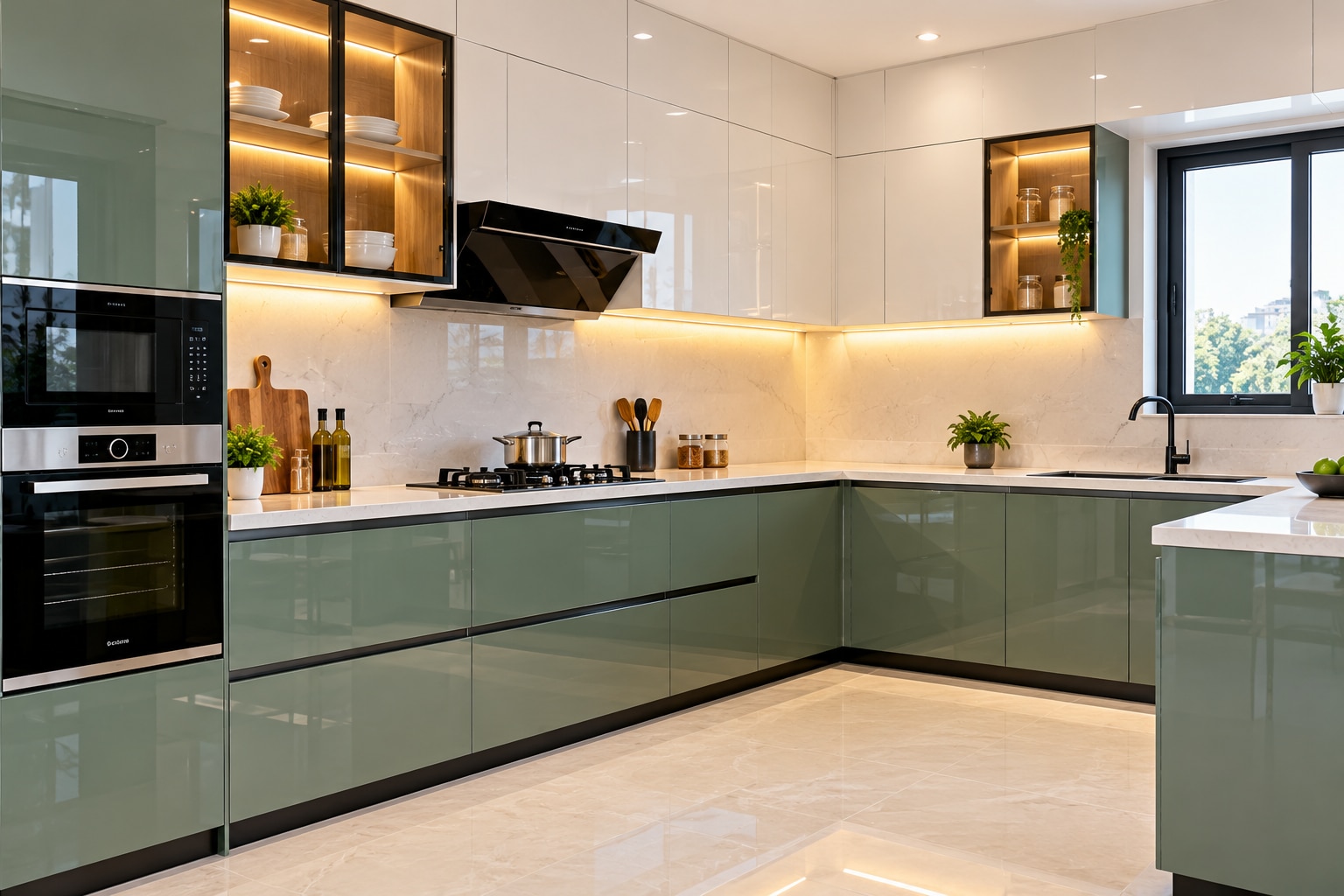
A bright, high-gloss acrylic face reflects more light than most matte laminates, making a compact kitchen look larger and more open. Its colour also appears deep and even, which suits contemporary homes. For families, acrylic kitchen advantages for homes include a smooth surface that does not trap crumbs and quick wipe-downs after ordinary spills.
An intact acrylic face is non-porous, so a soft cloth with mild detergent usually removes food marks without prolonged scrubbing. That helps after oil splashes or children’s messy snack preparation. It does not make the kitchen maintenance-free: aggressive cleaning can damage the finish.
Expect these daily trade-offs:
- Fingerprints show quickly, particularly around handles and on dark shutters.
- Grease film and water spots stand out under direct light.
- Fine scratches become visible on reflective faces, even when the panel still functions properly.
- Rough sponges, scouring pads, abrasive powders and harsh solvents can dull or mark the surface.
- Children’s toys, school bags and repeated impacts can chip exposed edges or corners.
High-gloss acrylic therefore rewards regular, gentle wiping and careful handling. Super-matte or textured laminate hides fingerprints and minor wear better in high-contact areas, while selective acrylic use on visible shutters or tall units limits scratch exposure without giving up its bright appearance.
What makes a premium acrylic kitchen durable in Thane
A premium acrylic kitchen in Thane is durable only when the construction beneath the face survives moisture and movement. Acrylic is a finish, not waterproof cabinetry: water usually reaches the board through sink cut-outs, joints, exposed edges or a plumbing leak.
Before treating it as a premium purchase, ask for these written specifications:
- Carcass and shutters: moisture-resistant or boiling-water-resistant plywood, or a documented moisture-resistant engineered board; avoid ordinary unsealed MDF in the sink zone.
- Acrylic sheet: named manufacturer or grade, sheet thickness, colour batch, and whether the face is high-gloss, matte or anti-fingerprint. Require a sample beside the final doors to check shade consistency.
- Edges: sealed, even edge-banding on every exposed side, with no absorbent board visible around handles, appliance openings or sink cut-outs.
- Adhesive: a manufacturer-approved adhesive compatible with both the acrylic and substrate, applied without gaps, bubbles or visible squeeze-out.
- Moisture protection: sealed cut-outs, a leak-resistant sink cabinet base, protected underside, and accessible plumbing so a small leak is found before swelling the board.
| Specification | Verify on quotation or sample | Failure it helps prevent |
|---|---|---|
| Substrate | Board type and moisture rating | Swelling and delamination |
| Edge treatment | Banding method and sealed cut-outs | Lifting, chipped corners and exposed board |
| Inspection | Replacement process for damaged shutters | Installation scratches and shade mismatch |
Selective acrylic use often improves premium modular kitchen suitability: place it on visible shutters or tall units, while choosing impact-tolerant, moisture-protected construction for the carcass and high-contact areas.
High-gloss, matte acrylic and competing kitchen finishes
There is no single best kitchen material for in thane: choose the finish according to cleaning habits, impact risk and where the shutter sits. High-gloss acrylic reflects light and gives deep, even colour, but dark doors reveal fingerprints, grease film, water spots and fine scratches.
Anti-fingerprint or super-matte acrylic hides marks better, though it still needs gentle cleaning.
| Option | Appearance | Family-use and Thane trade-off |
|---|---|---|
| High-gloss acrylic | Bright, reflective, contemporary | Easy to wipe; shows marks and scratches clearly, especially in dark colours |
| Anti-fingerprint acrylic | Soft, low-reflection, refined | More forgiving around children; still costs more than laminate and is not scratch-proof |
| High-pressure laminate | Matte, textured or gloss patterns | Usually cheaper and more scratch-tolerant; textured faces hide wear better |
| Membrane | Seamless, routed or shaker-style doors | Avoid beside high heat and persistent moisture because the film can lift or peel |
| PU paint | Smooth, custom-colour finish | Premium appearance; chips and repairs can require careful refinishing |
| Veneer | Natural wood grain | Warm and distinctive; needs proper sealing and shows variation between sheets |
| Glass | Reflective, seamless, easy-wipe surface | Suits selected shutters or backsplashes; fingerprints, breakage risk and edge details need attention |
For frequent cooking, pets or young children, textured laminate often beats high-gloss acrylic in high-contact zones. Acrylic remains a sound choice for visible shutters and tall units when you accept regular wiping.
Use moisture-protected plywood or documented moisture-resistant board behind either finish; sealed edges and a protected sink cabinet matter more than gloss level because leaks attack joints, cut-outs and undersides.
How to maintain acrylic and decide where to use it
Wipe oil, turmeric and water splashes as soon as you notice them. Use a soft microfiber cloth with diluted mild dish detergent, then dry the surface; standing moisture at edges and joints is more damaging than a quick spill.
Avoid abrasive powder, scouring pads, melamine sponges, bleach, acetone and rough paper towels, which can dull or scratch the face.
Plan the kitchen so the finish does not carry jobs it was never chosen to handle:
- Install a strong exhaust hood and use it during frying; grease film becomes harder to remove after repeated heating.
- Keep a dry landing area between the sink and hob, and protect the cabinet below the sink from leaks.
- Choose durable hinges, drawer channels and correctly sized drawers, since misalignment makes users pull or slam shutters.
- Add handles or edge pulls where children and frequent users will touch the same doors repeatedly.
- Ask DESIGNO CASA to map plumbing access and the highest-contact zones before fixing the finish schedule.
| Placement | Better choice | Reason |
|---|---|---|
| Visible shutters and tall units | Acrylic | Delivers brightness where appearance matters and receives less impact |
| Base cabinets near the sink | Textured or super-matte laminate | Hides fingerprints, water spots and minor knocks better |
| Under-sink and utility zones | Moisture-protected laminate construction | Limits damage if a pipe or bottle leaks |
| High-contact drawers | Durable laminate, with acrylic selectively | Reduces scratch visibility without losing a premium focal area |
Selective use makes more sense when your family cooks heavily, has young children or prefers low-maintenance surfaces.
Related product
 | Modular Furniture Premium Acrylic Modular Kitchen Luxury Kitchen with premium acrylic finish. View product → |
Frequently asked questions
Is acrylic modular kitchen design suitable for family homes in Thane?
Yes, when you want a bright, wipe-clean finish and will clean oil, steam and spills consistently. Frequent cooking does not rule out acrylic, but heat protection and careful installation matter.
What makes a premium acrylic kitchen durable in Thane?
Look for moisture-resistant cabinet boards, securely bonded acrylic sheets, sealed edges, reliable hinges and drawer channels, and protective detailing near the hob and sink.
Is high-gloss or matte acrylic better for a busy family kitchen?
High-gloss acrylic reflects more light and wipes clean easily, but it shows fingerprints, scratches and reflections. Matte acrylic hides marks better and creates less glare, though textured surfaces can need more careful cleaning.
How should you maintain acrylic kitchen cabinets?
Wipe spills and oil with a soft microfiber cloth and diluted mild dish soap, then dry the surface. Avoid abrasive pads, scouring powders, acetone and harsh solvent cleaners.
Keywords