Humidity, splashes, condensation and poor ventilation can damage a kitchen even when its cabinet faces look premium. By the end, you will be able to compare acrylic finishes, specify moisture-resistant construction and check whether a proposed kitchen is suitable for sinks, dishwashers, windows and damp utility areas.
Key takeaways
- Treat acrylic as the finish; inspect the cabinet core beneath it.
- Separate finish selection from board selection for every cabinet zone.
- Specify sealed edges, protected cut-outs and leak access around wet areas.
- Compare monsoon proposals by construction details, not glossy samples alone.
How Acrylic Performs During Thane’s Monsoon
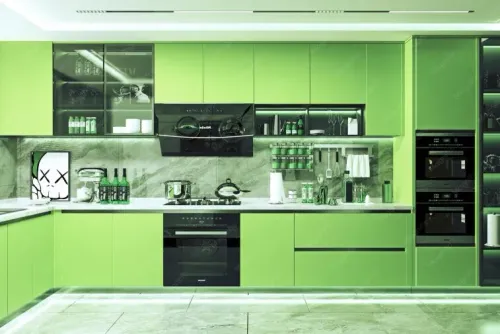
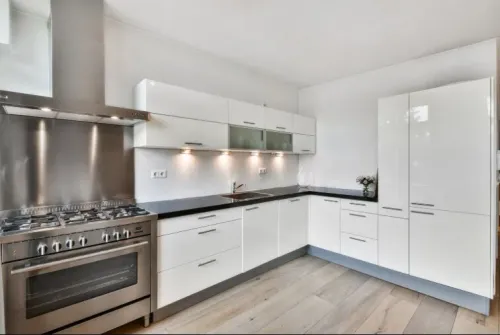
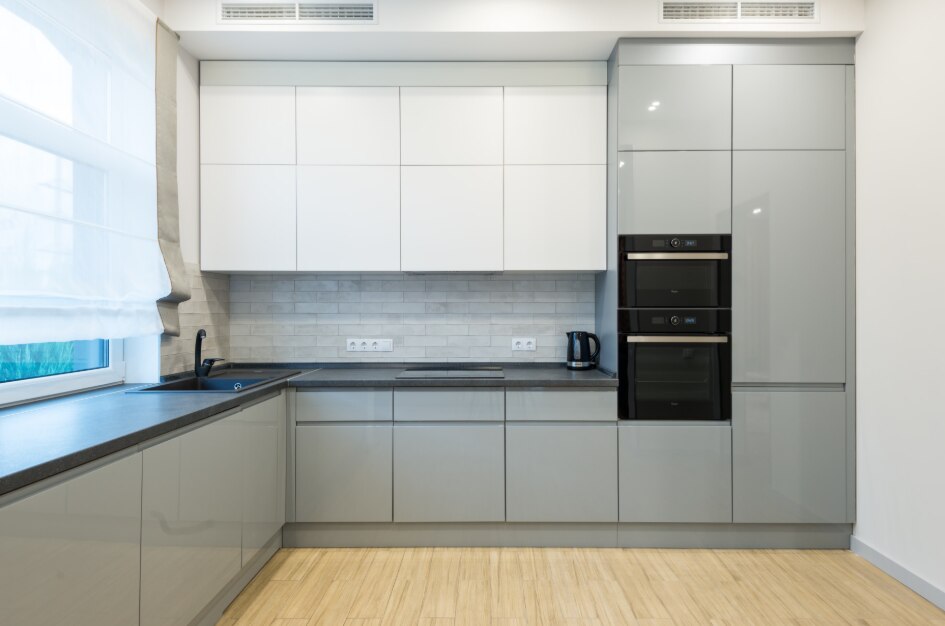
Acrylic itself tolerates ordinary splashes; the cabinet beneath it determines monsoon performance. Acrylic describes the visible sheet or laminate, not the structural board, so an acrylic modular kitchen in Thane must be assessed as a wet-zone construction rather than a decorative finish.
| Location | Main moisture risk | Required detailing |
|---|---|---|
| Window or balcony | Rain, seepage and damp wall contact | Protect backs and bottoms; seal edges and provide ventilation |
| Sink | Splashes, leaks and sink cut-outs | Seal cut-outs, joints and screw holes; use a protected board and removable liner |
| Dishwasher | Steam, drain leaks and repeated condensation | Seal inlet and drain penetrations; keep unprotected MDF away |
| Utility area | Floor-wash water and prolonged humidity | Raise the plinth, seal exposed edges and allow service access |
Water still reaches the core through exposed edges, joints, screw holes, sink cut-outs and damaged surfaces. BWR or BWP plywood, HDHMR or another specified board does not remove the need for sealing; MDF and particleboard swell quickly when water reaches an unprotected cut edge.
A monsoon kitchen design also needs moisture control. Closed windows, weak ventilation and wet cloths left inside cabinets trap humidity, while condensation encourages mould and swelling. A recirculating hood with a carbon filter reduces odour but does not remove the same amount of water vapour as a ducted hood discharging outdoors.
Use extraction, make-up air, cross-ventilation and prompt wiping around wet zones. Choose acrylic near these areas only when edge sealing, hardware, plinths and service access are treated as part of the assembly.
Choose the Finish and Cabinet Core Separately
High-gloss acrylic gives a uniform, reflective appearance, but fingerprints, dust and fine scratches stand out. Matte acrylic reduces reflections, yet still needs manufacturer-approved cleaning. Compare the finish against your household’s cleaning routine, not only the sample’s showroom appearance.
| Finish | Cleaning effort | Scratch visibility and light | Repairability and moisture risk |
|---|---|---|---|
| High-gloss acrylic | Frequent wiping shows best results | Reflects strongly; fine scratches show | Panel replacement is usually cleaner than local repair; exposed edges still admit moisture |
| Matte acrylic | Easier-looking day to day, but use approved cleaners | Lower reflection; marks can still appear | Replacement is practical; do not assume the surface is moisture-proof |
| Acrylic laminate | Routine wiping; edge detailing needs attention | Balance of reflection, texture and cost | May simplify replacement; joints and edges remain vulnerable |
| Painted finish | Needs prompt cleaning of spills | Colour and sheen reveal chips | Chips expose the substrate; moisture damage spreads from breaks |
| Membrane finish | Clean gently; avoid heat | Low to moderate reflection | Heat can loosen the membrane, while peeling or delamination allows moisture in |
Choose easy maintenance kitchen materials through a complete monsoon kitchen design, then specify the core separately. Use BWR or BWP plywood in sink and dishwasher zones; choose HDHMR where a smooth engineered core suits the design. Restrict moisture-resistant MDF to protected areas and seal every cut edge.
Ask for IS 303 or IS 710 grade documentation. “Waterproof” and “marine” are not interchangeable with BWP without proof. No board survives an unresolved leak.
What to Demand in the Acrylic Specification
A quotation that says only “acrylic” leaves the cabinet core, edge protection and repair responsibility unknown. Use this checklist before approving an interior designer acrylic kitchen for monsoon in Thane:
1. Name the acrylic product or manufacturer, state sheet or laminate thickness, identify the substrate board and grade, and specify the adhesive, colour code, edge material and installation method.
2. Approve a full-size sample in the kitchen’s actual lighting. Check colour consistency across doors, drawer fronts and future replacement pieces; a small showroom swatch can hide mismatched tones.
3. Require sealed ABS or PVC edge banding. The quotation must show treatment for corners, joints, exposed backs and plumbing cut-outs, not just the visible front edges.
4. Ask whether laser or hot-air edge-banding is used. A neat glue line improves appearance but does not seal a pipe penetration, appliance cut-out or damaged joint.
5. Confirm that protective film stays on every panel until installation and snagging are complete. Name the person responsible for removing it without scratching the face.
6. Get the surface repair and replacement policy in writing, including spare panels, matching edge material and exclusions for chemical cleaners, impact, moisture damage and plumbing leaks.
These details matter more than calling acrylic one of the easy maintenance kitchen materials. A clear specification lets you compare appearance, wet-zone protection and after-installation risk instead of choosing a finish name.
Build the Sink, Dishwasher and Utility Zones for Leaks
A slow leak under the sink can swell a floor before you notice it, even with BWP plywood. Inspect the wet-zone assembly, not just the acrylic face, using this monsoon kitchen design checklist:
1. Open the sink cabinet and confirm a removable drip tray or protective liner, sealed board edges, and waterproof sealant around every pipe penetration.
2. Check for a replaceable or removable plinth that keeps the carcass above floor-wash water and lets you inspect beneath it.
3. Verify an access panel for the trap, stop valves and waste connection. Leave enough service clearance to remove the trap without dismantling the cabinet.
4. Inspect dishwasher inlet and drain cut-outs for sealed edges and sealant. Keep the appliance away from unprotected MDF or particleboard, whose cut edges swell quickly.
5. Ask where a slow leak will first appear: use a visible liner, inspection gap or leak sensor before water reaches the floor and causes swelling.
6. Around balconies, windows and utility areas, protect cabinet backs and bottoms from wall seepage and floor-wash water with sealed panels and raised bases.
7. Specify stainless-steel or corrosion-resistant hinges, runners, baskets and fasteners; inspect concealed hardware and follow the manufacturer’s lubrication schedule.
Pair these easy maintenance kitchen materials with a ducted hood route, outdoor termination, accessible filter, cross-ventilation and a drying routine for wet cloths. Clean acrylic with a soft microfiber cloth, water and mild detergent; abrasive powders, scouring pads and harsh solvents can haze or scratch it.
How to Evaluate an Interior Designer’s Monsoon Proposal
A premium kitchen interior designer should earn your approval through construction evidence, not finish samples. Include DESIGNO CASA in the comparison, but judge every proposal as a wet-zone assembly: face material, substrate, sealing, ventilation, plinth and maintenance access.
Ask each designer to provide these before fabrication:
- Mark wet zones on the layout and nominate BWR or BWP plywood, HDHMR, or moisture-resistant MDF for each one.
- Show treatment for every edge, corner, joint, exposed back, sink cut-out and appliance penetration.
- Specify stainless-steel or corrosion-resistant hinges, runners, baskets and fasteners.
- Draw the hood duct route, bends, outdoor termination, filter access, electrical point and service-access openings.
| Check | Acceptable evidence | Warning sign |
|---|---|---|
| Board | Grade and location stated on the drawing | “Waterproof board” without a grade |
| Edges and cut-outs | Sealed ABS or PVC edges and sealed penetrations | Edge banding shown, pipe holes ignored |
| Ventilation | Duct route and access drawing | Only a chimney airflow number |
At handover, use the sink-cabinet checklist on site: inspect the drip tray, sealed edges and replaceable plinth; open the access panel and confirm that stop valves, traps and waste connections remain reachable. Get written answers for leaks, scratches, delamination and replacement colour matching.
An interior designer acrylic kitchen for monsoon in Thane is coordinated construction, not a glossy door. Choose acrylic when its cleaning trade-off suits you; choose matte, textured or more repairable surfaces for heavy use, children or limited ventilation. This is the practical test for an acrylic modular kitchen in Thane.
Related product
 | Modular Furniture Premium Acrylic Modular Kitchen Luxury Kitchen with premium acrylic finish. View product → |
Frequently asked questions
How does acrylic perform during Thane’s monsoon?
Acrylic handles ordinary splashes, but monsoon durability depends on the cabinet board, edge sealing and protection from standing water.
Should you choose the acrylic finish and cabinet core separately?
Yes. Select the visible acrylic finish separately from the structural board, then match the core to each cabinet’s moisture exposure.
What should an acrylic kitchen specification include?
Ask for the acrylic type, cabinet-core material, edge treatment, substrate thickness, hardware, cut-out sealing and installation method in writing.
How should sink, dishwasher and utility zones be built for leaks?
Use protected cabinet interiors, sealed plumbing cut-outs, accessible connections and layouts that limit water reaching adjacent cabinets.
How do you evaluate an interior designer’s monsoon proposal?
Check whether the proposal identifies wet zones, names construction materials and edge treatments, shows leak-control details and explains maintenance.
Keywords