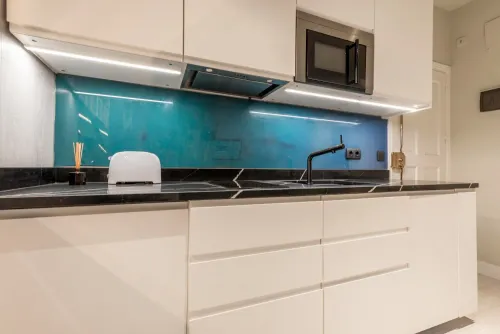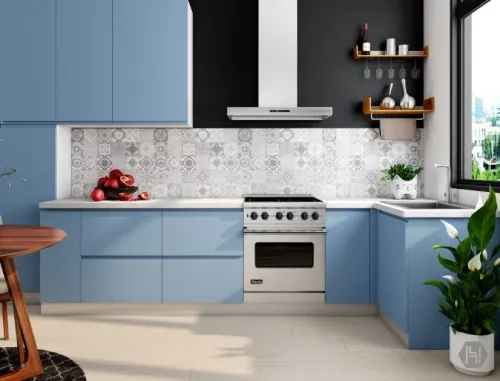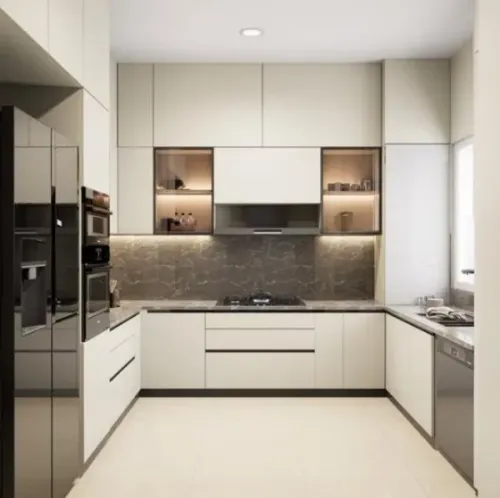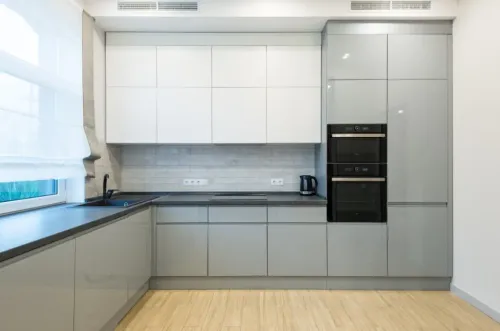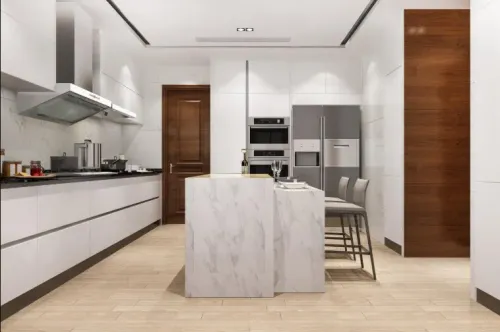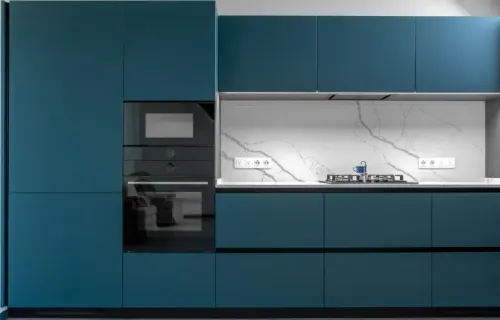
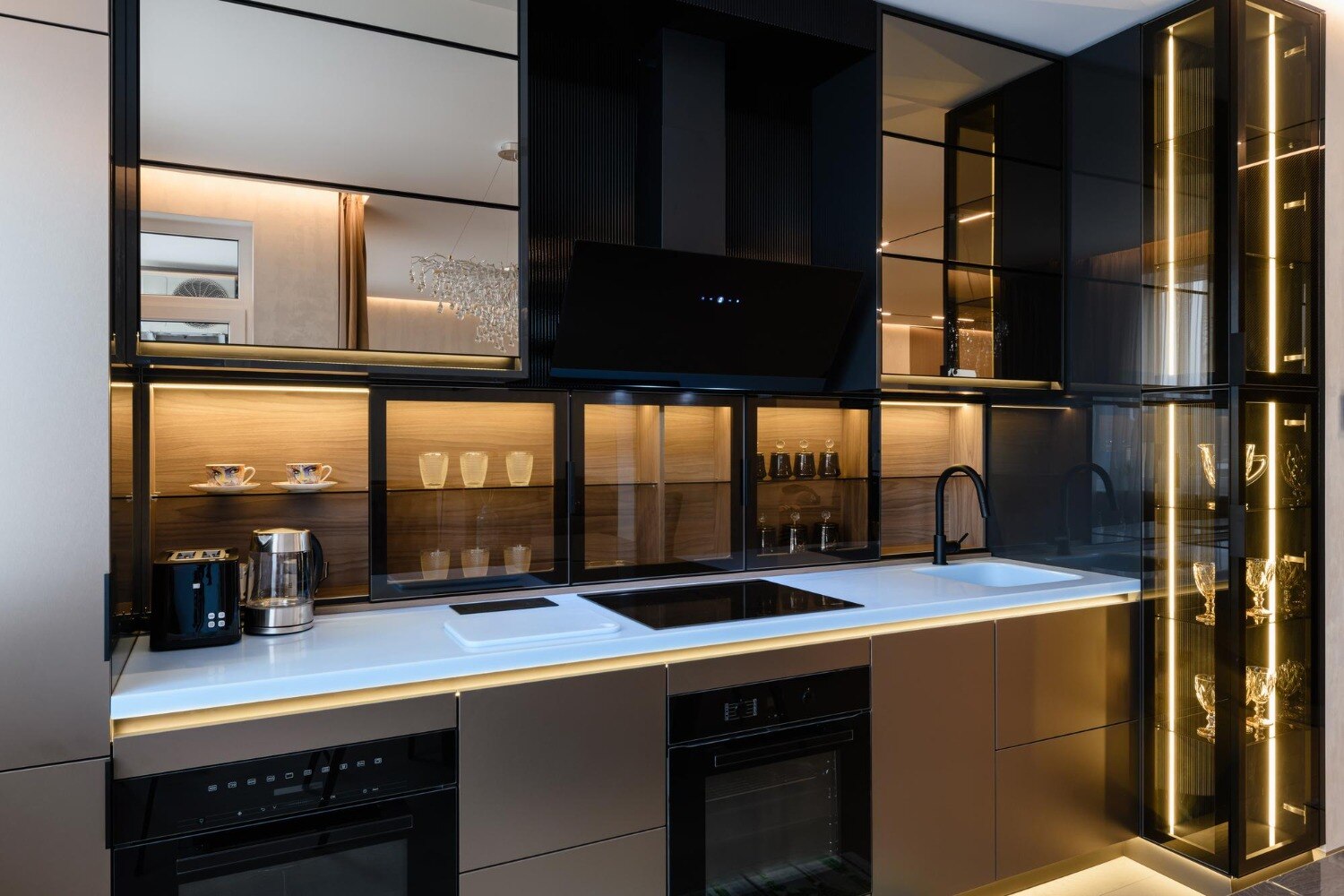
A premium acrylic kitchen rewards homeowners who want strong colour depth, reflected light and a precise contemporary finish, but it also exposes fingerprints, dust and fine scratches. Use your cooking routine, cleaning habits, budget, household behaviour and wider interior plan to decide whether the finish is worth specifying—or whether laminate, veneer or another surface will serve you better.
Key takeaways
- Choose acrylic if you accept daily wiping of fingerprints and grease haze.
- Use chimney extraction and control moisture to protect glossy cabinet fronts.
- Compare acrylic with laminate, membrane, veneer, and glass before deciding.
- Verify the acrylic brand, thickness, edge treatment, hardware, and warranty in writing.
Does your household routine justify premium acrylic?
Premium acrylic is justified when you cook frequently, value a bright high-gloss kitchen, and will wipe visible marks instead of waiting for a weekly deep clean. It suits households that use chimney extraction, control moisture, and handle doors carefully; dark, uninterrupted fronts show fingerprints, grease haze and fine scratches quickly.
Acrylic kitchen suitability is strongest when your priorities include strong colour depth, handleless lines, factory-made consistency and a contemporary appearance. Choose it for a compact kitchen that needs reflected daylight and task lighting, but resolve lighting, panel alignment and colour with full-size samples first. A small swatch can hide reflections and edge visibility.
Do not choose premium acrylic if you want the lowest upfront cost, a rustic or traditional finish, or a surface that disguises everyday marks. Reconsider it for children who strike doors with hard objects, uncontrolled moisture, weak ventilation or a routine that leaves spills overnight.
| Finish | Best match | Main compromise |
|---|---|---|
| Premium acrylic | Careful households wanting reflective, minimalist fronts | Fingerprints and scratches demand regular wiping |
| Matt laminate | Busy kitchens needing forgiving, low-effort surfaces | Less colour depth and light reflection |
| PU-painted | Custom colours and shaped details | Visible marks and touch-ups require more care |
| Veneer or solid wood | Warm, natural or traditional interiors | Grain variation and moisture protection need attention |
If you choose acrylic for a family kitchen, specify lighter colours, protected edges, soft-close hardware and replaceable modular fronts. Accurate site measurement also matters: uneven walls and late service changes create filler panels, poor alignment and lost storage.
What will premium acrylic feel like to use every day?
Expect a showroom-like surface every time you enter: acrylic reflects light strongly, so colours look deeper and a small kitchen can feel brighter. That visual impact is one of the clearest premium acrylic kitchen benefits, but the gloss also exposes fingerprints, grease haze, dust and fine scratches, especially on black or deep colours.
Daily cleaning is simple, not effortless. Wipe spills soon after cooking with a soft microfibre cloth and diluted, non-abrasive detergent, then dry the face to prevent streaks. Avoid scouring pads, powdered cleaners, solvent-based products and rough paper towels; they can dull the shine or leave fine marks.
Build these habits into your routine:
- Keep a clean microfibre cloth near the kitchen.
- Lift ceramic ware and metal containers instead of dragging them across a door or panel.
- Remove oily fingerprints from dark fronts before they build up.
- Check the cleaner on an inconspicuous area before regular use.
Acrylic is a cabinet-door and drawer-front finish, not a universal worktop material. A hot pan, sharp impact or gritty object can damage the face, and repairs rarely disappear completely on a mirror-like panel.
Pair the cabinetry with a worktop specified for heat, water and heavy abrasion, and choose a matt or textured finish elsewhere if constant reflections and visible touch marks would irritate you.
How does acrylic compare with other kitchen finishes?
Choose acrylic over other finishes if you want deep colour, strong visual brightness and a smooth, reflective composition, especially with handleless fronts. An acrylic modular kitchen for homeowners suits those who accept regular wiping and want a contemporary, factory-consistent appearance.
A practical acrylic kitchen suitability test is whether you value gloss more than disguised fingerprints. Compare the alternatives across the decision points that affect daily use:
| Finish | Appearance and upkeep | Repair, longevity and cost | Choose it when |
|---|---|---|---|
| Acrylic | High-gloss depth; fingerprints, grease haze and fine scratches show clearly | Difficult to touch up; durable with care; premium cost | You want a bright, minimalist kitchen and will maintain it |
| Laminate | Available in matt, woodgrain and gloss; easiest everyday cleaning | Good scratch resistance; simple replacement; lowest to mid-range cost | You want forgiving surfaces and value |
| Membrane | Seamless routed profiles; can lift or peel with heat and moisture | Repairs are difficult; moderate longevity; mid-range cost | You want moulded traditional details on a budget |
| PU-painted | Smooth colour with matt or gloss options; marks depend on sheen | Chips and touch-ups can be visible; premium cost | You want custom colour and accept careful handling |
| Veneer | Natural grain with a warm, refined look | Can be refinished; needs moisture control; mid to premium cost | You prefer understated, organic character |
| Solid wood | Authentic grain and substantial feel | Repairable but can move, dent and cost the most | You want traditional character, not visual uniformity |
Avoid the acrylic premium if you want the lowest upfront cost, a deliberately rustic finish, or cabinetry that hides rough handling. Choose matt laminate for high-touch homes where fingerprints and minor scratches should disappear. Use acrylic selectively rather than repeating gloss across wardrobes and every room.
What should you verify before approving an acrylic quotation?
Do not approve the quotation until “acrylic” becomes a written specification. The face could be cast PMMA, extruded PMMA, an acrylic-faced board, PET, or high-gloss laminate; these are not interchangeable. Ask for the face material, sheet thickness, core board, finish sample, and test documentation.
Check these quotation details:
- Material and construction: named PMMA grade or clearly identified acrylic-faced panel, core type and thickness, moisture-resistant carcass board, and separate pricing for doors, panels, fillers and appliance fronts.
- Edges: stated edge material, bonding method, colour match and corner finish. Inspect a sample at the corner, hinge cup, handle drilling and appliance cut-out; exposed board, white lines or weak bonding signal moisture trouble.
- Hardware: manufacturer and model for hinges, drawer runners, lift-ups and baskets, plus soft-close specification, adjustment provision and load rating. Generic “premium hardware” proves nothing.
- Performance: written cleaning instructions, scratch and chemical-resistance test results, UV or colour-stability evidence, and maximum permitted door dimensions. Check a full-size sample in your lighting for reflections and fingerprints.
- Warranty and repairs: coverage period for delamination, edge failure, colour change, hardware and installation; exclusions for heat, moisture and chemicals; response process; and the price and lead time for replacing one door.
The premium acrylic kitchen benefits justify the price only when the whole system is documented. Who should choose a premium acrylic kitchen? A buyer who values colour depth and precision, accepts visible marks, and wants replaceable modular fronts—not someone seeking the cheapest or most forgiving finish.
| Item | Written proof | Warning sign |
|---|---|---|
| Face | PMMA type and thickness | “Acrylic finish” |
| Core | Board type and moisture rating | Unnamed board |
| Warranty | Coverage and exclusions | Finish-only promise |
How should acrylic fit into a complete-home interior plan?
Measure the room before approving drawings, because a filler panel cannot correct a misplaced plumbing point or an out-of-square wall. An acrylic modular kitchen for homeowners delivers the cleanest result when a site survey records wall dimensions, ceiling height, service ducts, window reveals and socket positions.
Recheck those dimensions after flooring, painting and false-ceiling work; late changes create alignment gaps and lost storage.
Build the complete plan around these checks:
- Pair acrylic doors and drawer fronts with an engineered-stone or sintered-stone worktop near the sink and hob. These areas face more heat, impact, abrasion and standing water than cabinet faces.
- Use acrylic selectively on wall panels, then choose a quieter finish for wardrobes and other high-touch areas. Matt laminate, veneer, painted board and textured surfaces reduce reflections and make fingerprints less prominent.
- Keep plumbing traps, isolation valves, electrical junctions and appliance connections accessible through removable panels. Do not permanently seal them behind fixed cabinetry.
- Approve a repair schedule with labelled spare panels, matching edge material, adjustable hinges and documented hardware models. Record the acrylic sheet code and installation drawings.
Who should choose a premium acrylic kitchen? Choose it if you want visual continuity, but test a full-size door in your actual lighting at normal standing distance first. DESIGNO CASA can use that review to coordinate the kitchen, wardrobes and service access without repeating high-gloss surfaces where daily marks would frustrate you.
Related product
 | Modular Furniture Premium Acrylic Modular Kitchen Luxury Kitchen with premium acrylic finish. View product → |
Frequently asked questions
Who should choose a premium acrylic kitchen?
Choose it if you cook frequently, want a bright high-gloss finish, and will wipe visible marks regularly. It is less suitable if you want a low-maintenance or highly scratch-forgiving surface.
What does premium acrylic feel like to use every day?
It feels smooth, reflective, and easy to wipe, but dark uninterrupted fronts reveal fingerprints, grease haze, and fine scratches quickly. Use chimney extraction and handle doors carefully.
How does acrylic compare with other kitchen finishes?
Acrylic offers stronger gloss and visual depth than many laminates, while laminate is usually more forgiving of marks and scratches. Veneer provides natural grain, and glass creates a different reflective look.
What should you verify before approving an acrylic quotation?
Check the acrylic brand and thickness, edge treatment, colour code, board specification, hinges and drawer hardware, installation scope, cleaning guidance, and warranty exclusions in writing.
How should acrylic fit into a complete-home interior plan?
Coordinate the kitchen’s colour, sheen, handles, worktop, lighting, and storage details with wardrobes and other rooms. Balance high-gloss cabinetry with quieter textures elsewhere to avoid visual overload.
Keywords