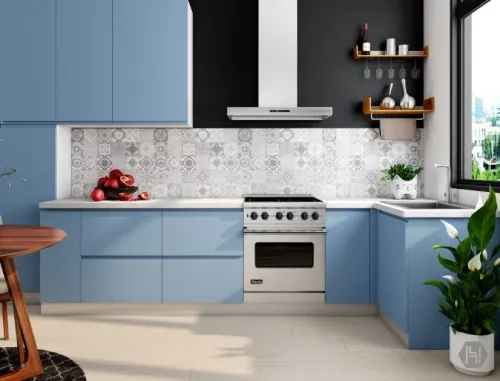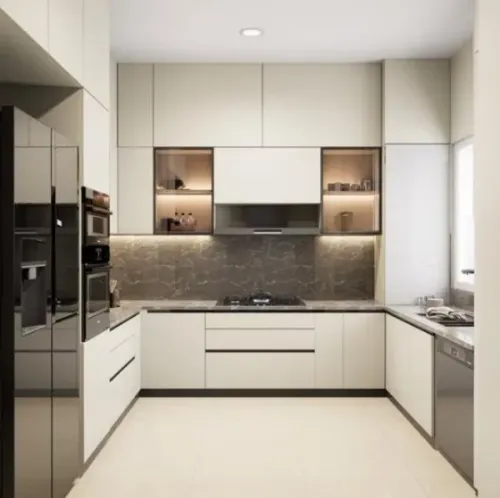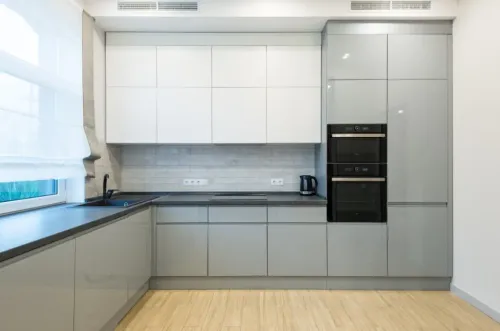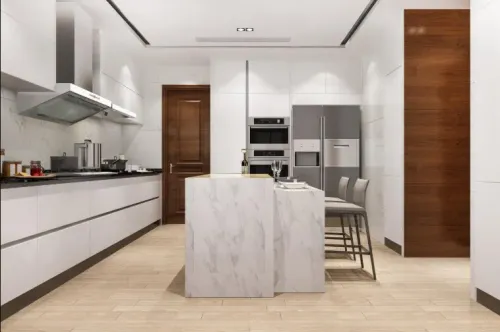
The choice between a handleless acrylic kitchen and one with conventional pulls changes more than the look of your cabinets. Compare grip, clearance, cleaning, hardware reliability, and user needs before you choose the best opening system for your kitchen.
Key takeaways
- Choose handles when wet or greasy hands are common.
- Use J-pulls or Gola channels for built-in opening without protruding handles.
- Choose push-to-open only when you accept regular panel cleaning and hardware adjustment.
- Check handle clearance against aisles, corners, and every user’s reach.
Handleless or handled acrylic cabinets: what changes in daily use?
Acrylic changes the look and surface-care routine; the opening system changes how the kitchen feels every day. The acrylic kitchen handleless or handles in Thane decision should therefore start with cooking habits, aisle clearance, and who uses each cabinet—not appearance alone.
| Option | Daily advantage | Daily drawback |
|---|---|---|
| Handled acrylic | A bar handle gives wet or oily hands a firm grip and keeps fingers off the acrylic face. | Handles project into narrow aisles, catch clothing, and need wiping around their bases. |
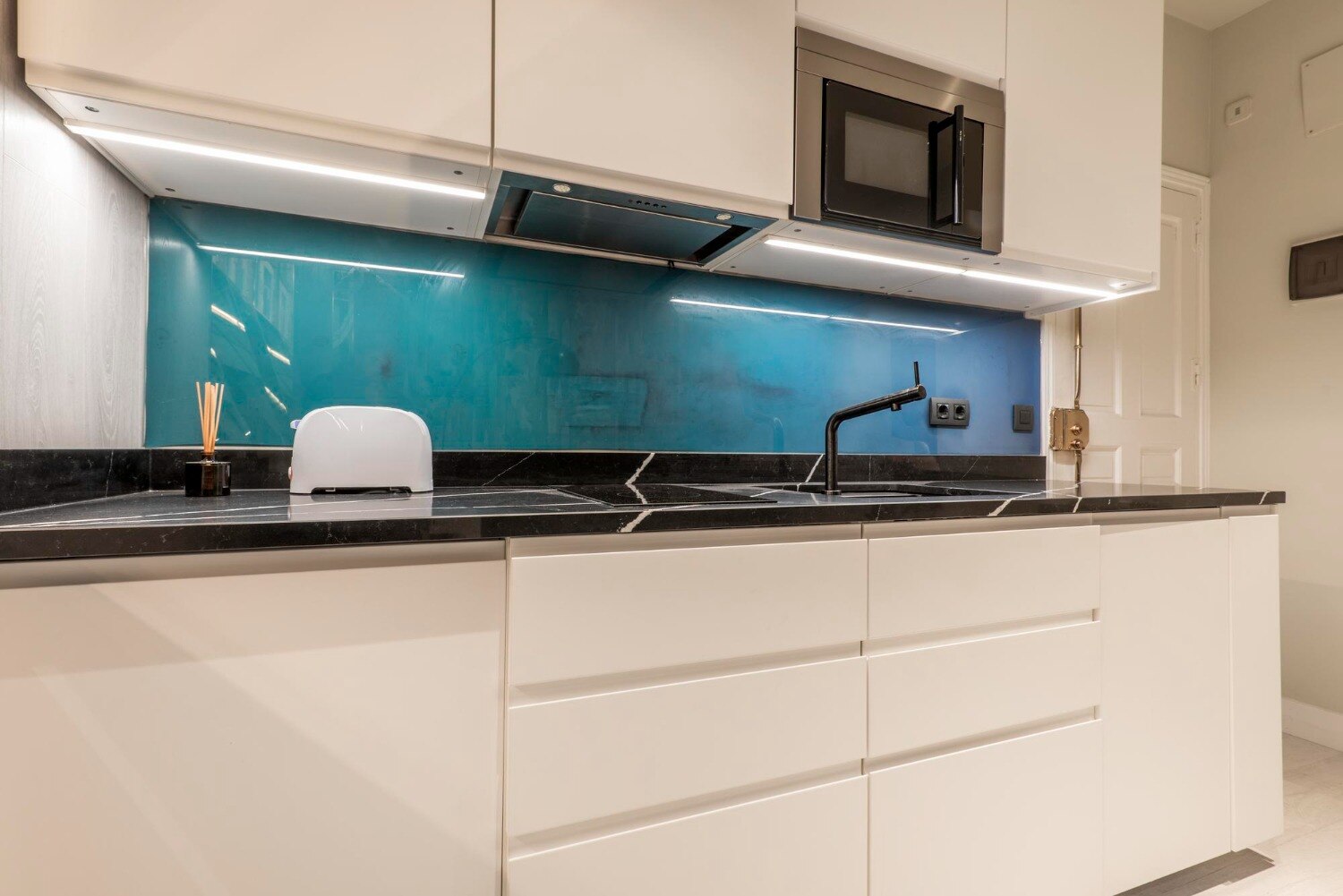
| J-pull or Gola channel | A continuous recess keeps the elevation visually clean and avoids projecting hardware. | Crumbs, flour, and frying grease settle inside the channel; wet fingers get less purchase. |
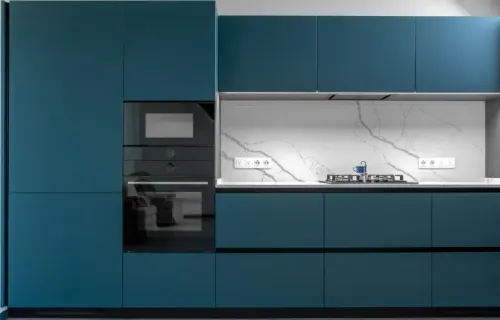
| Push-to-open | Flat fronts are easy to wipe and create a minimal handleless acrylic kitchen in Thane. | You need clear space to press and pull the door, and a failed latch can stop access until the hardware is serviced. |
For a working Thane kitchen, handles are usually the more forgiving choice, especially with frequent frying, children, older adults, or limited aisle space. Choose rounded bar handles with enough finger clearance rather than small knobs placed near a corner.
Handleless cabinetry does not automatically make a kitchen larger: channels consume usable cabinet space, while push-latches need opening clearance. Also specify sealed acrylic-board edges, protected sink-cabinet cut-outs, and a moisture-resistant core; acrylic is a face finish, not waterproof construction, and monsoon leaks can swell exposed MDF.
J-pulls, Gola channels, and push-to-open hardware are not the same
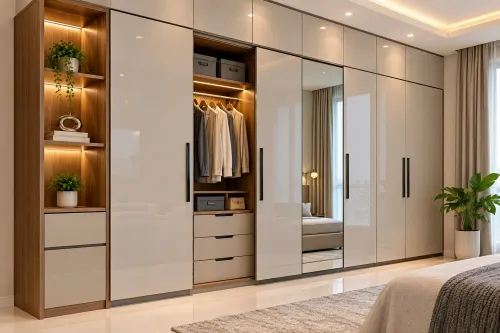
A handleless acrylic kitchen in Thane should be compared by mechanism, not by the word “handleless.” Acrylic supplies the visible finish; J-pulls, Gola channels, and push-to-open hardware determine grip, clearance, cleaning, and future adjustment.
| Option | How it opens | Main trade-off | Check before choosing |
|---|---|---|---|
| J-pull | An integrated J- or C-shaped recess in the door or drawer edge | Keeps hardware visually discreet but reduces the usable edge for gripping | Test whether the recess suits your finger reach and drawer depth |
| Gola channel | An aluminium horizontal or vertical channel fixed to the cabinet frame | Creates a continuous crumb- and grease-catching recess and uses cabinet height or depth | Confirm the channel’s profile, access for wiping, and lost internal storage |
| Push-to-open | A spring-loaded latch releases the door when you press its face | Gives the cleanest front but needs opening clearance and hardware adjustment | Ask how the latch is adjusted, replaced, and released during a power or latch failure |
Compare the actual door and drawer dimensions, not only the elevation drawing. A channel can reduce usable storage, while a push-latch needs enough aisle space for the door to swing after release.
- Whether wet or oily fingers can find the grip
- How easily you can reach deep drawers
- Whether the recess can be cleaned after frying
- The hardware warranty and replacement process
How wet hands, grease, crumbs, and fingerprints affect the choice
For regular cooking, a projecting bar handle is usually easiest to use and clean. It gives you a firm grip with wet, oily, or flour-covered hands and keeps repeated contact away from the acrylic face.
| Opening system | Wet or oily hands | Crumbs and grease | Fingerprints and cleaning |
|---|---|---|---|
| Bar handle | Provides a positive grip without pressing the door | Debris stays on the surface and around the handle bases | Fewer face marks; wipe the handle and its fixing points |
| Handleless channel | Offers a continuous grip, but wet fingers can slip inside a shallow recess | Horizontal channels collect crumbs, dust, and frying residue | Frequent wiping is needed inside the recess and on the acrylic edge |
| Push-to-open | Requires a firm press, which is awkward with slippery hands | The door gap and latch area need regular cleaning | Pressing the acrylic creates more fingerprints and smudges |
Heavy frying makes a simple handle the lower-maintenance choice. A channel can look clean in a showroom yet hold masala, oil mist, and crumbs during daily use; push-to-open hardware also needs enough clearance for the door to spring outward.
Use this cleaning routine for either system:
- Wipe acrylic with a soft, damp microfibre cloth and mild dishwashing solution.
- Dry the surface to prevent streaks, especially on dark or high-gloss acrylic.
- Brush or vacuum handleless channels and door gaps before wiping them.
- Avoid abrasive pads, scouring powder, and solvent-based cleaners that can dull the finish.
Handle shape, size, and clearance for every person using the kitchen
Rounded, easy-grip bar handles are the safest default for children, older adults, and users with limited hand strength. Choose acrylic kitchen cabinet handles with a D-shaped profile, smooth closed ends, and enough projection for three or four fingers. A handle diameter around 10–16 mm is easier to grasp than a tiny knob.
Avoid sharp corners and oversized pulls that catch clothing or strike a child’s head.
| Option | Grip and clearance | Best fit | Limitation |
|---|---|---|---|
| D-shaped bar pull | Full-finger grip; allow about 25–40 mm projection | Older adults, weak grip, frequent cooking | Projects into a narrow aisle |
| Recessed J-pull or Gola channel | No projecting edge; provide a continuous finger recess | Children and compact walkways | Crumbs and grease collect inside the channel |
| Push-to-open latch | Press the door or drawer front; keep standing clearance for the spring opening | Minimalist elevations and users who can press firmly | Stiff latches frustrate weak hands and need front clearance |
- Put the most-used drawers between waist and elbow height; avoid forcing an older user to bend or reach above shoulder level.
- Use a contrasting handle colour on glossy acrylic so the grip remains visible under kitchen lighting.
- Fit child locks to cleaning-product and waste-storage cabinets; do not rely on handle shape alone.
- Test every door with the actual counter, adjacent appliance, and aisle width. A wide drawer that opens into a walkway can create a trip or collision hazard.
A practical recommendation for choosing your acrylic cabinet style
For most Thane homes, acrylic cabinets with slim bar handles are the practical default: they open easily with wet or oily hands, suit frequent cooking, and cost less to maintain than complex push-to-open hardware. Choose a matte or textured acrylic finish if fingerprints and cleaning time bother you.
| Option | Best fit | Main compromise |
|---|---|---|
| Handled acrylic | Frequent cooks, children, older adults, or users with limited hand strength | Handles occupy a little aisle space and need regular wiping |
| J-pull or Gola handleless | Small kitchens where a clear-looking frontage and fewer projecting parts matter | Grease and crumbs collect in channels; usable drawer space can reduce |
| Push-to-open acrylic | Minimal-use kitchens with dry hands, disciplined closing, and a larger hardware budget | Doors need accurate adjustment and repeated pressing; failures are harder to diagnose |
Pick handled doors when cooking happens several times daily, the kitchen has wet work near the sink, or several family members use it. Choose J-pulls or Gola channels for a compact kitchen with adequate finger clearance and a cleaning routine that includes the channels. Reserve push-to-open for lighter use.
Ask DESIGNO CASA to show the actual opening force, aisle clearance, channel clean-up, and hardware adjustment method before approving the design. Seal the sink cabinet, dishwasher sides, plinth, joints, and every cut-out; acrylic covers a board core, and a leak can still swell exposed MDF.
Related product
 | Modular Furniture Premium Acrylic Modular Kitchen Luxury Kitchen with premium acrylic finish. View product → |
Frequently asked questions
What changes in daily use between handleless and handled acrylic cabinets?
Handled cabinets provide a clear gripping point and quick opening, while handleless systems create a cleaner front but require you to use a profile, channel, or push mechanism.
Are J-pulls, Gola channels, and push-to-open hardware the same?
No. A J-pull is an integrated recess in the cabinet profile, a Gola channel is a continuous rail fitted behind the door or drawer edge, and push-to-open hardware releases the panel when you press it.
How do wet hands, grease, crumbs, and fingerprints affect the choice?
Handles keep hand contact away from much of the acrylic surface. Handleless profiles collect crumbs in their recesses, while push-to-open fronts receive frequent fingerprints and need more wiping.
How should you choose handle shape, size, and clearance?
Choose a grip that every user can hold securely, then check that it does not catch clothing or obstruct an aisle, corner, appliance door, or nearby cabinet.
What is a practical recommendation for choosing an acrylic cabinet style in Thane?
Choose handled cabinets for heavy cooking and frequent wet-hand use, J-pulls or Gola channels for integrated styling with dependable access, and push-to-open for carefully planned, low-clutter zones.
Keywords